Childhood is such a short period of our lives, yet it casts a long shadow.
It’s amazing how much of our adult life is shaped by rules we learned before we had any say in them. Rules we didn’t consciously choose; that helped us survive, and then quietly followed us into adulthood.
For example, I'm an adult child of a person with an alcohol use disorder.
- Who was not reliable.
- Did not provide consistently for our family.
- And was generally just absent.
That meant my other parent had significant survival instincts. Her family had told her that she was on her own if she didn't leave my dad. They didn't want their support to go to his use disorder.
Which is fair, and also deeply painful.
So my mom worked her ass off.
- She took odd jobs to feed us.
- She moved irrigation pipe.
- She made home repairs.
- She showed up for basketball games alone.
She taught us something powerful: You don't need a man to get shit done.
And those lessons stuck.
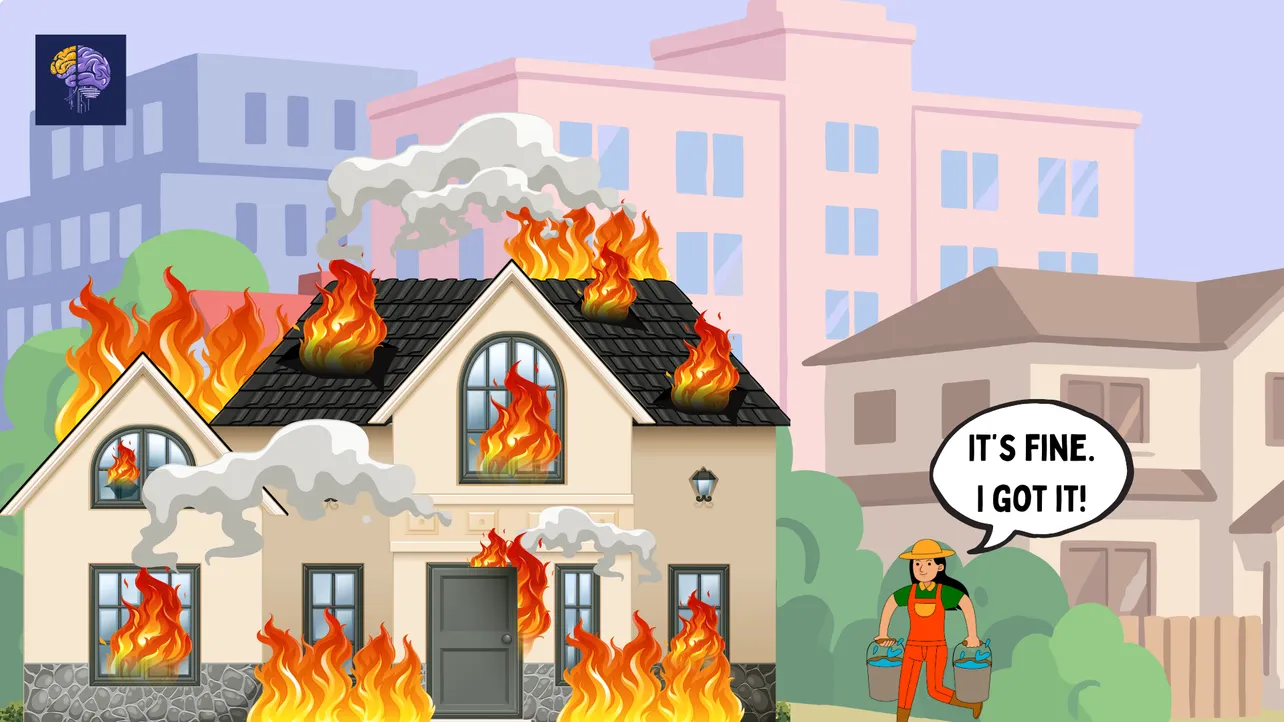
“I Got This” (When I Absolutely Do Not)
To this day, I tell my partner that "I got this," regularly...When I very much do not "got this."
He offers to help with things like tearing down trees I don’t want in my yard, and I refuse because I don’t need a man.
The problem is: I do not own a chainsaw.
And if I did, I would probably not have a leg.
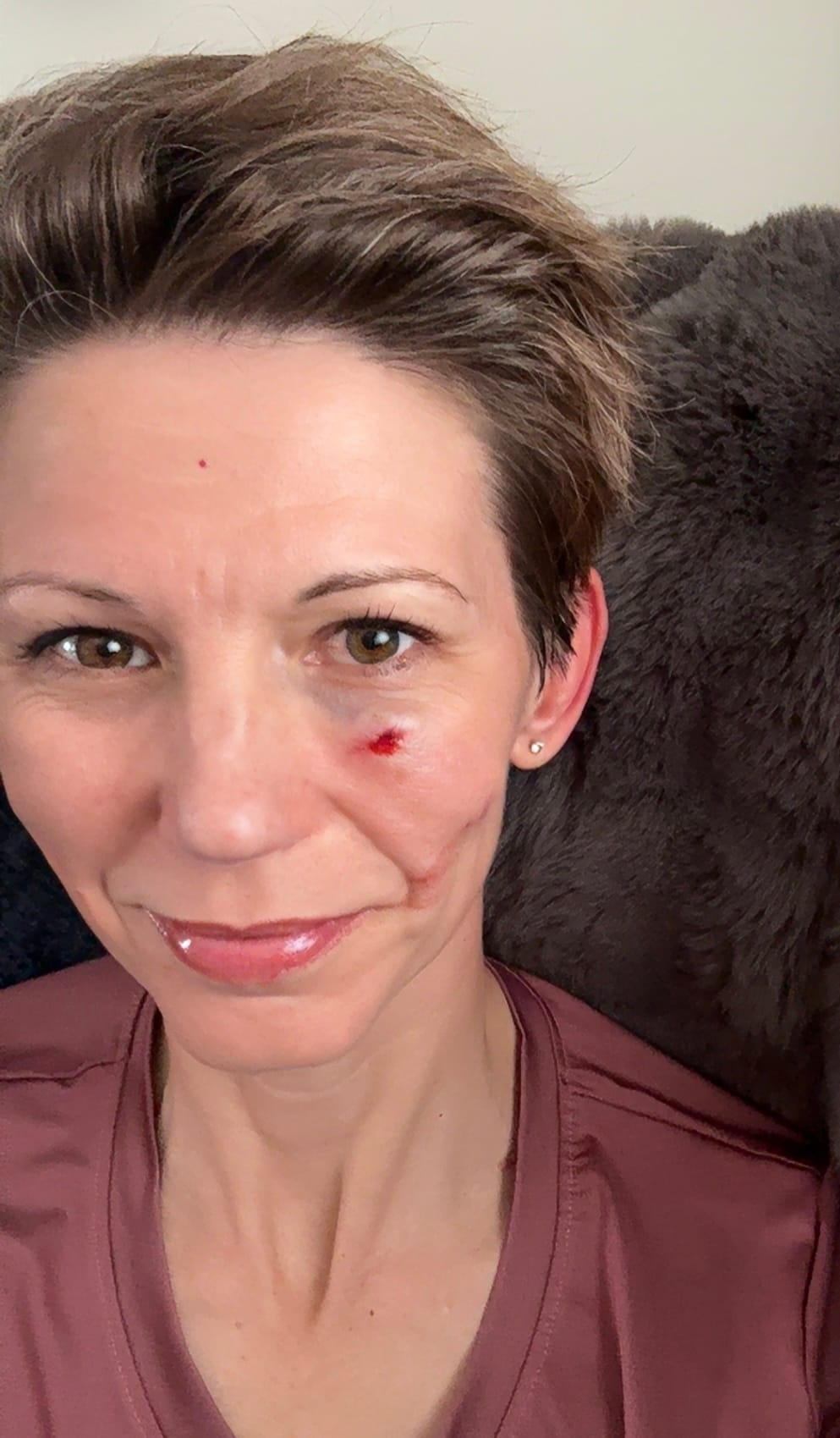
Which is how I ended up with a black eye last summer after almost knocking myself out alone in my backyard.
Strong? Yes.
Independent? Absolutely.
Wise? Debatable.
So how do we unlearn rules like that?
Survival Rules Aren’t Bad. They’re Just Outdated.
My mom had good intentions. She may not have even known she was teaching us these rules. She was just surviving.
And to be clear: there are times when that rule still serves me.
- I’m not afraid to try new things.
- I’m not afraid to stand up for what I believe in.
- I’m not afraid to do hard things alone.
But there are also times when I should ask for help and don’t.
Because people are not trustworthy.
Because depending on others feels dangerous.
Because proving yourself to me is no small task.
And yet, I also know this:
I want my daughter, and the people around me, to know that it’s okay to ask for and accept help.
No one is an island. No one can do everything alone. And trying to do everything alone is incredibly depressing.
We are in a loneliness epidemic. According to the CDC, 1 in 3 Americans suffers from loneliness.
That doesn't happen in a vacuum.
We Don’t Just Teach Independence. We Punish Need.
Every day, I talk to older adults who need help and refuse to ask for it. Admitting they need help feels like admitting failure.
And culturally, we reinforce that belief.
In this country, we’ve decided that if you need help, you’d better prove it. In writing. Repeatedly.
You’d better show that you’re worthy by volunteering or working at least 80 hours per month.
If you can’t do that for some reason, then…too bad.
That doesn’t make people more responsible.
It makes them more ashamed.
I work with someone who was on Social Security Disability due to a severe back and neck injury. Watching them move is painful. Still, under social pressure, they tried to return to work.
What many people don’t know is that if you work beyond certain limits, the government decides you’re no longer in need and revokes your assistance.
So they lost their benefits.
As they aged, their condition worsened. They could no longer function and required surgery. They reapplied for the assistance they qualified for just a few years earlier.
They were denied.
Twice.
Without income and unable to work, they lost their housing. With two children. They lived on the street for two months last summer.
This is what “asking for help” looks like in real life.
The Shame Loop We Don’t Talk About
Culturally, we’ve decided that needing help means there is something wrong with you.
So people refuse support.
They push through pain.
They break themselves trying to prove worth.
And when they finally apply for assistance, they feel guilt and shame for not being able to make ends meet on their own.
But here’s the truth no one wants to say out loud:
If a person could work, they would.
No one wants to feel like a burden. No one wants to feel like a leech. People want dignity, stability, and safety.
If we really want to reduce the number of people needing assistance, we have to move upstream.
Upstream Means Children, Families, and Safety
We have to fight for equity in education, healthcare, and economic resources. We have to reduce trauma and chronic stress. We have to stop asking why people use substances and start asking why they’re hurting.
As Dr. Gabor Maté says:
“Ask not why the addiction, but why the trauma.”
Good boundaries include being able to ask for help.
But people can’t do that if it isn’t safe.
The opposite of addiction...
So What Can We Do?
Actions speak louder than words.
In your own sphere of influence, what might it look like to:
- Believe people when they say they’re struggling.
- Offer help without making it a test.
- Model asking for help out loud.
- Respond to vulnerability with steadiness instead of judgment.
- Treat people as human beings trying to get their needs met.
How might that change your community?
Your workplace?
Your family?
Maybe even the world.
Because the opposite of addiction isn’t independence.
It’s connection.
And connection starts when we make it safe to need each other.
If this resonates, you’re not broken—you adapted.
More reflections on boundaries, connection, and real life are available for members.